Picture two gas stations on the same stretch of road in Mandeville. Both sell 87 and 90. Both have a canopy, an attendant and a price board. A driver has about five seconds to pick one.
Now picture a household in Portmore whose cylinder runs out on a Sunday. There are several cooking gas brands to call, and the gas inside each one does the same job.
So what makes someone choose you?
It isn’t the product. In this sector the product is close to identical, and your customers know it. They choose the company they trust to be safe, to show up and to deal with them straight. That is the job of business branding.
In this guide, you’ll learn:
- Why branding matters more, not less, when products look alike
- What safety, reliability and credibility look like as brand signals
- The five building blocks: brand identity, positioning, messaging, visual identity and customer trust
- How Jamaican energy brands are setting themselves apart
- Simple steps you can take this month
Let’s get into it.
Why Business Branding Matters More When Everyone Sells the Same Thing
Fuel and cooking gas are about as close to a commodity as it gets. A customer can’t test what’s in your tank or your cylinder. They can’t see quality, so they judge what they can see: your forecourt, your truck, your cylinder, your staff and how you answer the phone.
The market is also crowded. Reporting on the Fair Trading Commission’s review of the petrol trade counts roughly 80 TotalEnergies stations, about 70 under the Texaco brand and about 50 under Rubis, with local networks such as Fesco and Petcom growing alongside them. On the cooking gas side, the Ministry has reported that about 86% of Jamaican households use LPG for cooking. Nearly every home is a customer, and several brands want that business.
Here’s a detail from that same reporting worth noticing. The head of the gasolene retailers’ association described two stations, side by side and under the same brand, charging different prices. The name on the canopy is only part of the brand. The rest is the operator: how the place is run, how people are treated and whether the price feels fair.
That’s why branding your business in this sector isn’t decoration. It’s how you make an invisible promise visible.
What Customers Are Really Buying: Safety, Reliability and Credibility
Ask a customer why they stick with one station or one gas dealer and you’ll rarely hear “the fuel is better.” You’ll hear some version of three things.
Safety. Cooking gas is safe when it’s handled properly, and everybody knows what happens when it isn’t. Jamaica has national standards for inspecting, retesting and repairing LPG cylinders, and regulators have been clear that meeting them isn’t optional. Compliance is the floor. Branding is how you show it: clean, well-kept cylinders with intact seals, a delivery person in uniform, and safety instructions a grandmother can read.
Reliability. Gas runs out at the worst time. A fleet manager needs the tanker on Tuesday, not Thursday. Reliability is a brand promise you keep or break every single day, and customers remember both.
Credibility. People want to know there’s a real, accountable business behind the name. A proper address, named people, accurate pricing and a consistent look all say “we’ll still be here next year.”
| The promise | What the customer notices | How your brand proves it |
| Safety | Condition of cylinders, pumps, trucks and uniforms | Visible checks, clear safety instructions, trained staff who explain what they’re doing |
| Reliability | Whether you arrive, open and answer when you said you would | Stated delivery windows, one order number that works, honest updates when something slips |
| Credibility | Whether you look and sound like the same company everywhere | Consistent signage, receipts, website and WhatsApp, with real photos of your people and sites |
The Five Building Blocks of a Strong Energy Brand
A brand isn’t one thing. It’s five things working together. Miss one and the others have to work harder.
1. Brand identity: who you are
Before colors and logos, you need a clear answer to a simple question: who are we, and what do we stand for? Your purpose, your values and the way you treat people sit here.
For an LPG dealer, that might be “the gas company that never leaves a home without a working stove.” For a station operator, “the cleanest, friendliest stop on the highway.” Simple is fine. Vague is not.
2. Brand positioning: the space you own
Positioning is the one idea you want to be known for, compared with everyone else. In a look-alike market, this is where most of the value is.
We’ve seen this up close. We worked with Superior Gas Company from 2015 to 2022, as part of a client group that also includes CWH and Tap A Wile. We began with strategic marketing planning, then supported Superior with design services and a website, bringing brand strategy into the site as we built it out. Superior is a registered petroleum company with offices in Brown’s Town, St. Ann and in Kingston. It didn’t try to out-shout the multinationals. It positioned itself as a community-centric petroleum company, with the tagline “Fuelling the Community.”
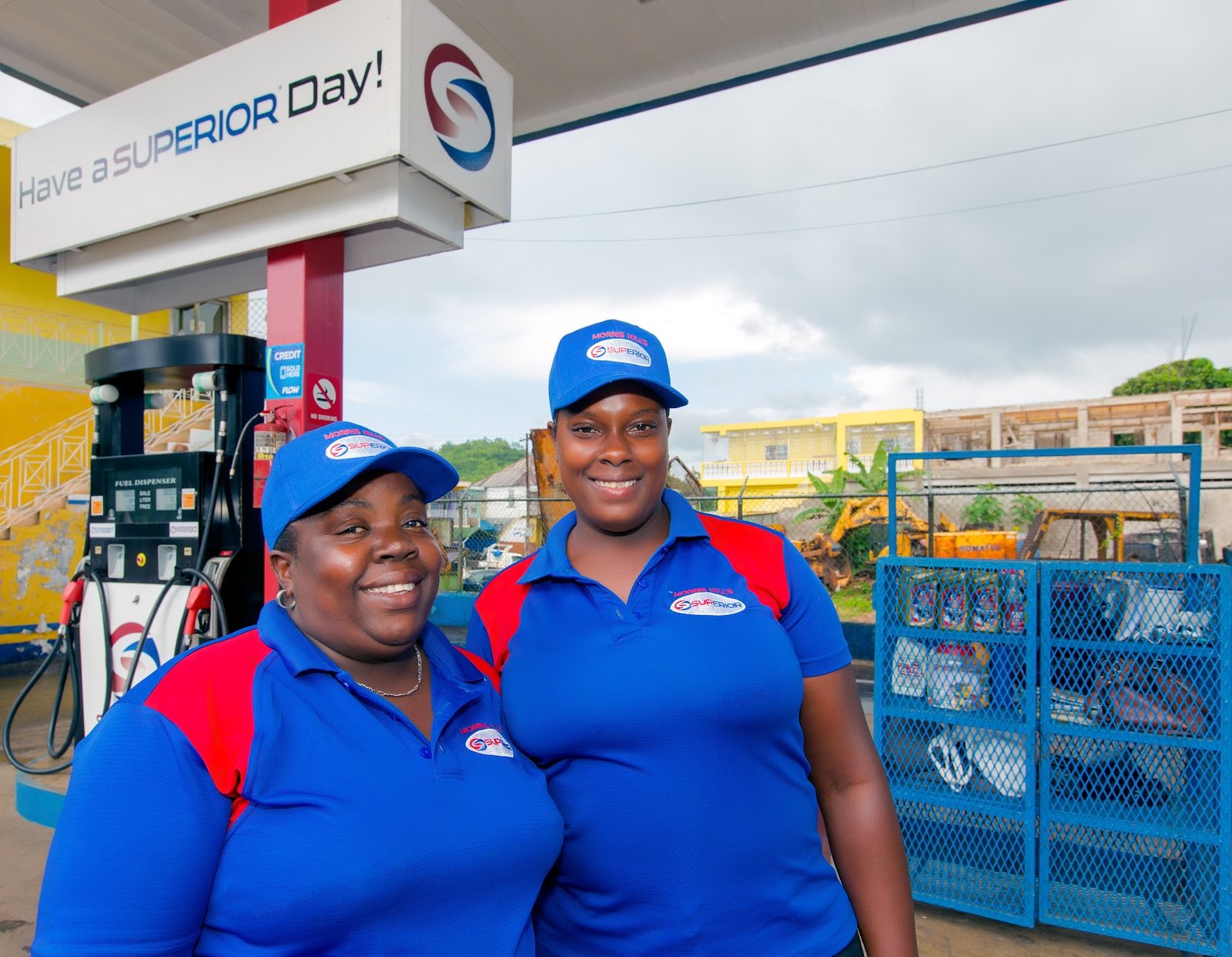
The Superior team plays an important role in delivering friendly customer service and creating a welcoming experience at every visit. Their branded uniforms reflect the company’s identity and commitment to serving customers.
Notice what that does. It gives customers a reason to choose Superior that has nothing to do with octane. Superior has since refreshed its website with a new design, but the structure and much of the content still follow the framework that began with our work. You can read more in the Superior Gas Company case study.
3. Messaging: what you say and how you say it
Messaging turns your positioning into words people hear every day. That includes your tagline, but also the less glamorous lines: how an attendant greets a driver, what your dispatcher says when a delivery is late, and how your safety notice is written.
A good test: would a customer in Half-Way-Tree and a customer in Black River both understand it the first time? Plain language builds trust. Jargon and fine print do the opposite.
4. Visual identity: what people see
In energy, your visual identity is based on hard-working surfaces:
- Forecourt signage and price boards
- Tanker and delivery truck livery
- Cylinder color, collar and seal
- Uniforms and ID badges
- Receipts, invoices and delivery slips
- Your website, WhatsApp profile and social pages
Every one of these is either building recognition or wasting it. For CWH, the cooking gas business in the same client group, our design work covered illustrations, flyers, calendars, billboards and smaller road signs. These are everyday surfaces, and together they put one name in front of people across the parish. Superior’s fuel line goes a step further and carries its own product names, such as Econo87 and Power90. A named product is easier to remember, ask for and trust than “the regular one.”
5. Customer trust: what you earn
The first four blocks are things you design. Trust is the result. It builds slowly through repeated proof and it can be lost in one careless delivery.
Think of it as a balance that every contact adds to or takes from. A driver gets the right fuel and a friendly greeting. A household gets its cylinder on the day promised. A fleet manager gets an invoice that matches the quote. Each moment is small, but together they say one thing: these people do what they say.
That’s the real reason consistency matters. A customer who sees the same colors, the same tone and the same standard of care at every contact starts to believe the promise. A customer who sees a rusty cylinder from a company with a glossy Instagram page stops believing it. People trust what they hold in their hands over what they scroll past on a screen.
The payoff is worth the patience. Trusted brands get repeat orders without discounting, a second chance when something goes wrong, and recommendations at the gate or on WhatsApp from customers who now speak for you.
How to Differentiate When the Product Is the Same
If you can’t change what’s in the tank, change what surrounds it. Jamaican energy brands have already shown a few ways to do this.
- Lead with safety you can see. GasPro introduced a see-through composite cooking gas cylinder in 2020 and talked about safety first. Customers could see the difference without reading a word.
- Make it easier to buy. Fesgas, the cooking gas arm of Fesco, partnered with a delivery app in 2024 so households could order a cylinder exchange online. Same gas, different experience.
- Stand for something local. Fesco leans openly on being proudly Jamaican. Superior built its identity around community. Neither claim depends on the product.
- Turn service into the brand. When we worked on the Tropical Battery rebrand, a neighboring sector with the same look-alike problem, the differentiation strategy was built around a mobile response service, not the battery itself.
The pattern is the same each time. Pick one thing customers care about, do it better than the next company, and make sure people can see it.
A word of caution: your point of difference has to be true. If you claim the fastest delivery in St. Catherine, your dispatch has to back that up. In a sector built on safety, an empty claim costs more than no claim at all.
Business to Business Branding: Fleet, Commercial and Bulk Customers
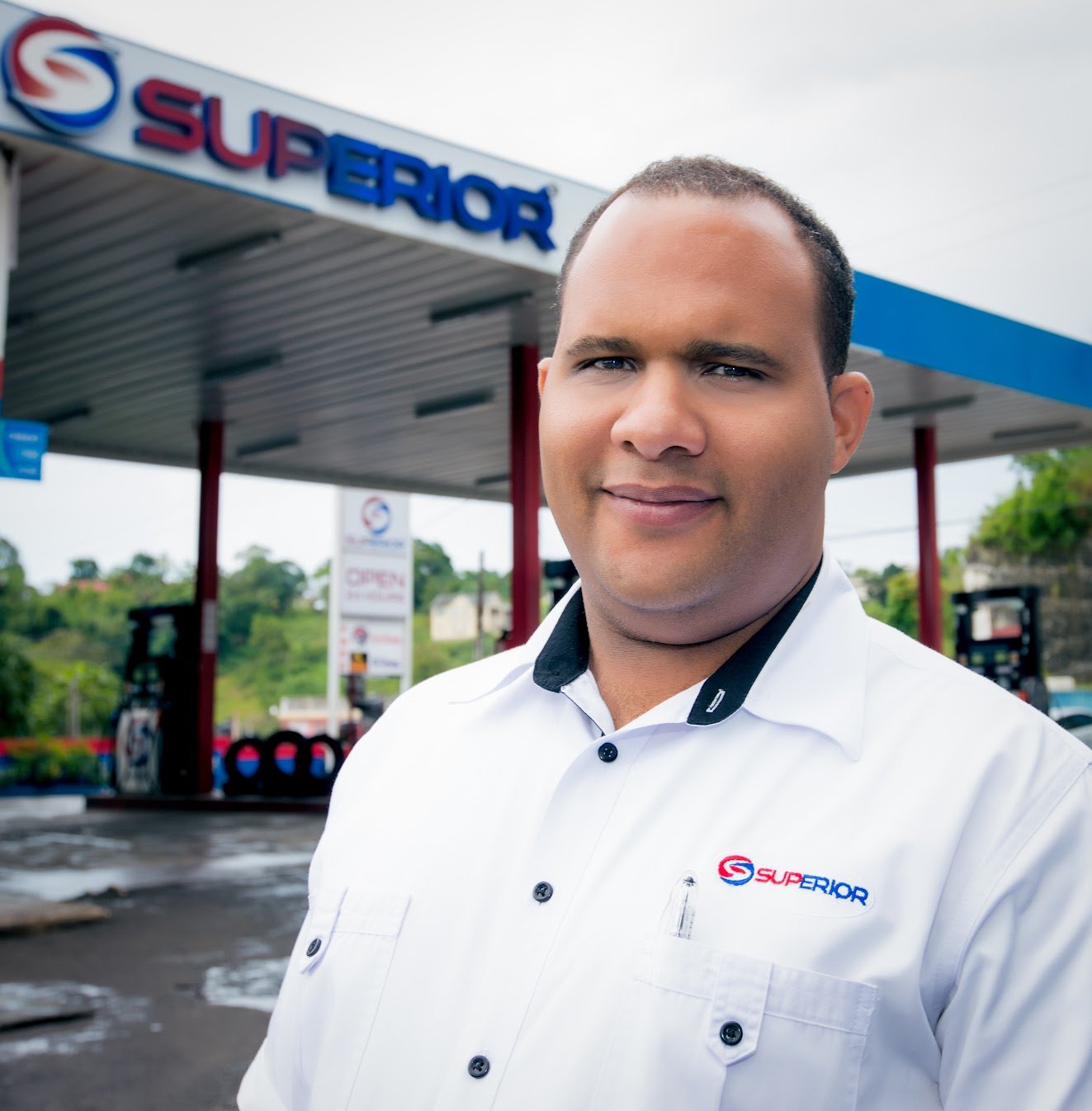
A proud representation of the Superior brand, showcasing its professional team and strong presence at its fuel station. The branded uniform and station signage help maintain a consistent and recognisable brand identity.
Households and motorists are only part of the picture. Many energy companies in Jamaica earn a large share of revenue from other businesses: fleet fuel accounts, bulk LPG for restaurants, bakeries and hotels, industrial supply and marine fuel.
Business to business branding works differently. Your buyer is a procurement officer or an owner signing a contract, and their name is on the decision. They aren’t asking “do I like this brand?” They’re asking “is this company a safe pair of hands?”
So they check. They look at your website, your company profile, your people and your facilities. This is where professional presentation earns its keep. For West Indies Petroleum, our work between 2015 and 2021 covered corporate headshots, location photography, graphic design, and a website we built and maintained. Some of those headshots are still in use on the company’s site today. None of it is flashy. All of it helps a commercial buyer see a serious, well-run operation before the first meeting.
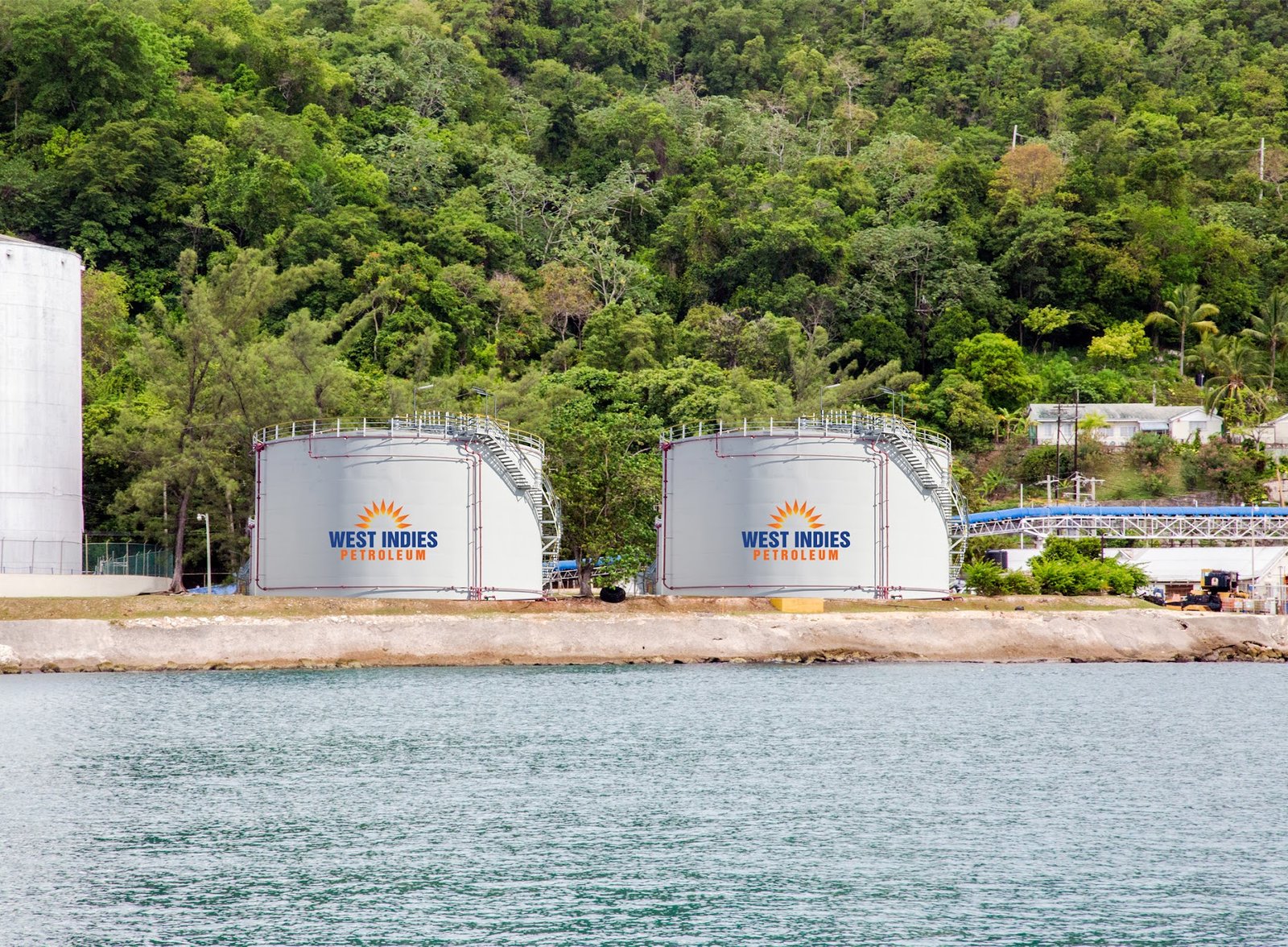
West Indies Petroleum’s storage terminal showcases its fuel storage infrastructure and commitment to supporting Jamaica’s energy sector through reliable petroleum operations.
For B2B, focus your brand on:
- Proof of capacity: real photos of your depot, fleet and equipment
- Named people: who the client will actually deal with
- Clear process: how ordering, delivery and billing work
- Useful information: Superior’s mission, for example, talks about giving clients accurate data so they can make fast decisions
A polished proposal won’t win a contract by itself. A sloppy one can lose it.
8 Actionable Branding Tips for Jamaican Energy Businesses
You don’t need a multinational’s budget to do this well. Start here.
- Start with strategy, not the logo. Decide who you serve, what you promise and why you’re different before you repaint anything. If you’ve never done this formally, it helps to know what happens in a first session with a brand strategist.
- Write your safety promise in one sentence. Then list three things customers can see that prove it. If you can’t list three, that’s your to-do list.
- Walk your own customer journey. Drive onto your forecourt as a stranger. Order a cylinder from your own number. Note every moment that feels careless or confusing.
- Give your team the words. Attendants, drivers and dispatchers are your brand for most customers. A short greeting, a safety check script and a way to handle delays go a long way.
- Treat trucks and cylinders as moving billboards. They’re seen across the parish every day. Clean, consistent and well-maintained says more than any ad.
- If you operate under a major brand, brand what you control. You can’t change the canopy, but the shop, the service, the cleanliness and your role in the community are yours.
- Use real photos. Your people, your site, your fleet. Stock images of foreign gas stations tell a Jamaican customer nothing about you.
- Be the same company everywhere. Match your name, colors, hours and tone across signage, Google, WhatsApp and social media. Then reply to reviews, especially the unhappy ones.
Branding also isn’t a one-time project. Markets shift, new players arrive and teams change. Many owners find that ongoing brand strategy support keeps decisions consistent long after the launch.
A 30-minute brand check
- ☐ Stand across the road from your site. Can you read your name and tell what you stand for?
- ☐ Check three cylinders or one truck at random. Would you be proud to see them in a customer’s yard?
- ☐ Call your own order line and time how long it takes to get a clear answer
- ☐ Put a receipt, a social post and your signage side by side. Do they look like one company?
- ☐ Ask two staff members what the company promises its customers. Do the answers match?
Frequently Asked Questions
Why does branding matter if fuel and cooking gas are the same everywhere?
Because customers can’t judge the product, they judge the company. Branding gives them reasons to trust you: visible safety, dependable service and a consistent, professional presence.
I operate a station under a major fuel brand. Can I still build my own brand?
Yes. The marketing company owns the name on the canopy, but you own the experience. Service quality, cleanliness, your convenience store, your staff and your community ties are all yours to shape.
What should an LPG dealer brand first?
Start with what customers touch: the cylinder, the delivery person and the ordering experience. If those three feel safe and reliable, the rest of your branding has something solid to stand on.
How is business to business branding different in the energy sector?
Commercial buyers are managing risk. They want proof of capacity, clear processes and accountable people. Your website, company profile and proposals matter more than catchy advertising.
How do I show safety without frightening customers?
Keep it calm and practical. Show the checks you do, explain them in plain language and train staff to do them in front of the customer. Confidence reassures. Warnings in capital letters don’t.
When should we bring in a brand strategist?
When the decision affects more than how the business looks. A new location, a new product line, a merger, a name change or a move into commercial accounts are all good moments to get the strategy right before spending on design.
Final Thoughts
In a market where every pump and every cylinder holds much the same thing, your brand is the difference. Strong business branding in Jamaica has less to do with a clever logo than with keeping a clear promise, visibly, every day.
Here’s the short version:
- Customers buy safety, reliability and credibility
- Decide what you stand for before you design anything
- Make your promise visible on every surface customers see
- Pick one true point of difference and prove it
- Present yourself to commercial buyers as a safe pair of hands
- Stay consistent, because trust builds through repetition
Your next step is simple. Do the 30-minute brand check above and write down what you find. Most owners spot two or three quick fixes on the first walk.
If you’d like a second pair of eyes from a team that has worked with petroleum and gas companies here at home, we’re happy to help. You can book a brand discovery call and we’ll talk through where your brand stands and what to tackle first.